Friday, 2 May 2014

As Stupid as Peter Minuit

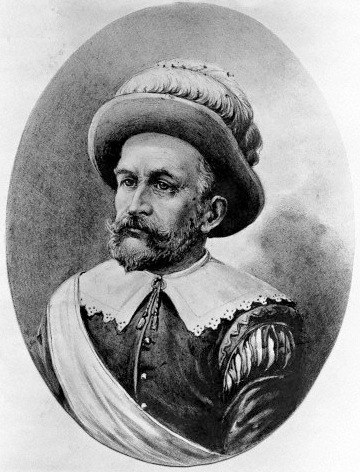
File:Peter Minuit portrait New Amsterdam 1600s light.jpg
Peter Minuit was born in the Netherlands around 1580. The actual date isn’t known but who really cares anyways. He joined the Dutch West India Company in the mid 1620s and was sent to the New Netherlands to trade for animal pelts and anything else of value. He was appointed the Governor General of New Netherlands in 1626. No one would even remember Peter except for a deal that he made with the Natives. Even with the deal, most of us have no idea who Peter Minuit was.
 
The deal he is famous for was the purchase of Manhattan Island for sixty guilders or about $24. The natives had no use for Guilders, so it is suspected that they took the value in trade goods, probably trinkets and beads. There is some question about who made the better deal. Minuit did manage to buy a large island of strategic importance that had plentiful hunting and in a few hundred years the real estate would be some of the most valuable land in the world. It is suspected that the natives who sold the island actually came out on top because the tribe that sold the island didn’t actually own it. It may have been New York’s first real estate scam. The natives also didn’t share a European view of ownership, and felt that air, water and land couldn’t be owned or traded. They were in for a painful lesson in economics, European style.

I like the idea that the indigenous peoples valued beads above all else. They would use them to trade and also to decorate clothing and tools. I guess that beads were very time consuming to make and a bag of beads would be indicative of great wealth and power. They traded what couldn’t be traded for untold wealth.

Today I was in the second hand store looking for something that might catch my eye. Most of the time there isn’t anything that anyone else would find intriguing, but I am caught by the item. I once found something that looked like a tape measure, but it didn’t have any numbers on it. I did a little research and it was actually a bowls measure. It is used to discover whose ball is closest to the tiny white ball. Well, mine is used to take up space in a drawer, but someday, I will be lawn bowling and won’t everyone be amazed as I reach in my pocket and pull out an official measure.
 
Today I ended up buying two bags of assorted glass beads. I justified the purchase because my grandson Tornado sometimes enjoys making necklaces for his grandma and poppa. I really just bought them because I like the look of them. It’s like looking into a rainbow that has fallen to the ground, broken into a million pieces and have been swept into a pile. I’ve had them just a short time, but I already have my favourites.


I understand those natives that traded Manhattan for a bag of beads, I would have done the same thing, and if I can find someone as stupid as Peter Minuit, I just might.

Know anyone interested in an island?

Thursday, 1 May 2014

Something I Have Been Thinking About


Years ago, I was listening to Peter Gzowski interviewing an author on the radio while I was delivering my mail. The author was an English woman who had written a book on food called “Much Depends on Dinner” which talked of the significance of the foods that we take for granted every day.
 
The book begins with an examination of corn or maize which is a North American staple and is quite literally the basis for our culture and lives. She talks about how there is nothing in a North American supermarket that is untouched by corn, with the exception of fish and that will have been shipped in cartons that are at least partially manufactured using corn. Livestock and poultry are fed with corn, corn oil cooks our food, corn oil is used in the manufacture of soap, insecticides, salad dressings, mayonnaise and MSG is made from corn.

Corn syrup is used for candy bars, ice cream, ketchup, soft drinks, beer, gin and vodka. Corn starch is found in baby food, table salt, icing sugar, instant coffee or anything dehydrated. It is the neutral carrier in thousands of products from headache tablets, tooth paste, cosmetics, dog food, match heads, charcoal briquettes and some detergents. She goes on and on, but the gist of the story is that our society is totally dependant on corn and it’s by products.
 
Corn is also the foundation for the development of complex societies because it required co-operation from many thousands of people to cultivate, process and distribute the product. This kind of organization just doesn’t happen, political systems are needed to rule the people who are doing this important work and of course military systems need to be in place to protect the people from other people who want your corn wealth. Thus a complex society with many levels of government and an economy is created.

You get the idea, corn is pretty damned important and without corn, there is a good chance we wouldn’t be the people we are today. Margaret also talks of rice which has had an even greater contribution to the world than corn, as amazing as that seems.
 
What I don’t get is that if corn is the building block of my body and yours, why is it so difficult to digest? We had corn for dinner the other night and inevitably, what goes in must come out. Generally, food that I consume is unrecognizable as food on the way out, except for corn. It looks just as it did on the plate when it is floating in the toilet bowl. I would imagine it would taste the same too, but I don’t ever plan to find out if that is true.
 

It’s just something I have been thinking about for the last couple of days and I thought I should share.